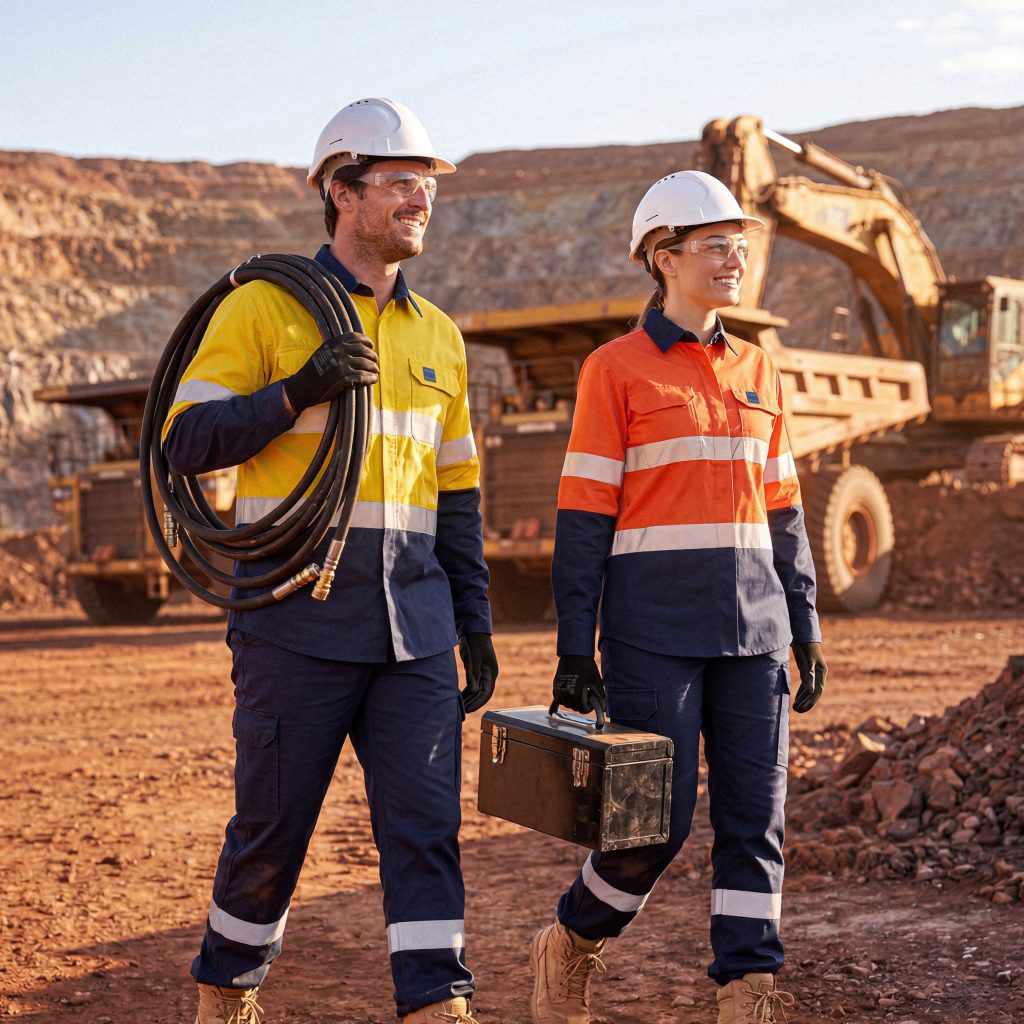
For businesses operating in mining, manufacturing, utilities, construction, engineering and other high-risk environments, Fire Retardant (FR) workwear may be essential.
Most organisations spend significant time selecting the right garments and ensuring workers have appropriate protection for their role.
But there is another challenge often overlooked.
The real cost of an FR program extends beyond the garment itself. It includes everything required to keep those garments available, maintained, managed and ready for use every day. This includes supply, wearer allocation, laundering, repairs, replacements and administration.
The Cost Most Businesses Don’t Measure
When organisations evaluate Fire Retardant workwear, the focus is often on garment price.
Yet businesses may also incur substantial costs through the time and resources required to manage the program.
Questions quickly emerge:
- Who orders new garments?
- Who manages sizing?
- Who tracks stock?
- Who arranges replacements?
- Who manages damaged garments?
- Who handles laundering?
- Who ensures workers have the garments they need?
Across multiple sites, shifts and workers, these responsibilities can create significant operational complexity.
Hidden Cost #1: Administration
Managing Fire Retardant workwear does not often sit with a single person.
Instead, responsibility may be shared between:
- Operations Managers
- Safety teams
- Procurement
- Site Administrators
- Supervisors
Every new starter, replacement request, garment issue or workforce change creates additional administration.
While each task may seem minor, collectively they consume valuable time that could be spent running the operation.
Hidden Cost #2: Garment Availability
A Fire-Retardant garment only provides value when it is available for the worker who needs it.
Businesses often face challenges such as:
- Missing garments
- Insufficient stock
- Delayed replacements
- Incorrect sizing
- New starter requirements
These issues may create frustration for workers and additional workload for site teams.
Hidden Cost #3: Laundering and Garment Care
Fire Retardant garments require ongoing care throughout their service life.
Organisations managing garments internally must coordinate:
- Collection
- Laundering
- Distribution
- Storage
- Repairs
- Replacement
For larger workforces, maintaining this process consistently may become increasingly difficult.
Hidden Cost #4: Inventory Management
Many businesses own and manage their own FR garments.
This often requires maintaining:
- Spare inventory
- Replacement stock
- Multiple size ranges
- New starter garments
Holding inventory can tie up capital and create an ongoing administrative burden.
As workforce needs change, inventory requirements change with them.
Hidden Cost #5: Workforce Growth
As businesses grow, so does the complexity of managing specialised workwear.
More workers often means:
- More ordering
- More stock management
- More laundering
- More repairs
- More replacements
What works for 20 wearers may become significantly more challenging at 100 or 500.
Hidden Cost #5 How Long Does Fire Retardant Workwear Last?
One question a businesses might ask is how long Fire-Retardant workwear will last in a demanding industrial environment.
The answer depends on how garments are used, cared for and the conditions they face each day. Heavy wear, challenging environments and inconsistent garment care can all affect service life.
For businesses purchasing garments outright, monitoring condition, organising repairs and managing replacements can become an ongoing administrative task.
That’s one reason why organisations might choose a managed FR workwear service. With garment inspection, repair and replacement built into the program, businesses can spend less time tracking workwear and more time focusing on their operations
Hidden Cost #6 What Happens to Workwear When an Employee Leaves?
Managing workwear doesn’t stop when an employee leaves.
Many businesses may have cupboards, storerooms or “uniform rooms” filled with returned garments waiting to be assessed, reissued or disposed of. Over time, these forgotten garments can create hidden costs through storage, administration and excess inventory.
A managed service provides a more structured approach to garment lifecycle management, helping businesses track garment allocation, recover workwear and manage end-of-life processing more efficiently.
By supporting the entire lifecycle, from issue through to replacement and retirement, businesses gain greater visibility and control across their workwear program.
A Different Approach
Many organisations are now looking beyond simply purchasing Fire Retardant garments.
Instead, they are looking for ways to simplify how those garments are managed.
A managed service brings together:
✓ Garment supply
✓ Wearer allocation
✓ Collection
✓ Commercial laundering
✓ Repairs
✓ Replacement
✓ Ongoing service support
The objective is simple:
Reduce the burden of managing specialised workwear so operations teams can focus on running the business.
What are the benefits of a Managed Fire Retardant Workwear Service?
A managed service can help organisations:
Reduce Administration
Less time spent ordering, replacing and managing garments.
Simplify Operations
One provider supporting the entire garment lifecycle.
Improve Garment Availability
Helping workers have access to the garments they need.
Reduce Complexity
A structured approach to garment management across sites and workforces.
Scale More Easily
Supporting growing workforces without increasing internal workload.
The Alsco Uniforms Difference
At Alsco Uniforms, we don’t simply supply Fire Retardant garments.
We provide a managed rental service designed to help simplify how Fire Retardant workwear is supplied, laundered, repaired, replaced and managed.
Our range includes garments manufactured using recognised Fire Retardant fabric technologies, including Westex® UltraSoft® and Proban®, supported by a managed service model designed to reduce administration and operational complexity.
Fire Retardant Workwear. Managed From Start to Finish.
When evaluating your current FR program, it’s worth asking one question:
Are you buying garments, or are you managing a garment program?
Because for many organisations, the administration behind Fire Retardant workwear has become a bigger challenge than the garments themselves.
Alsco Uniforms helps take that burden off your team’s to-do list
Explore the range: Uniform Rental and Workwear Rental for Australia | Alsco Uniforms Australia